Paying a personal loan early starts with requesting a formal settlement quote. It does not start with negotiating a generic discount or treating the app balance as the payoff amount.
The lender’s quote should state the amount, the date it is valid to and the payment instructions. Your job is to verify those details and compare the quote with the cash you would otherwise pay under the remaining schedule.
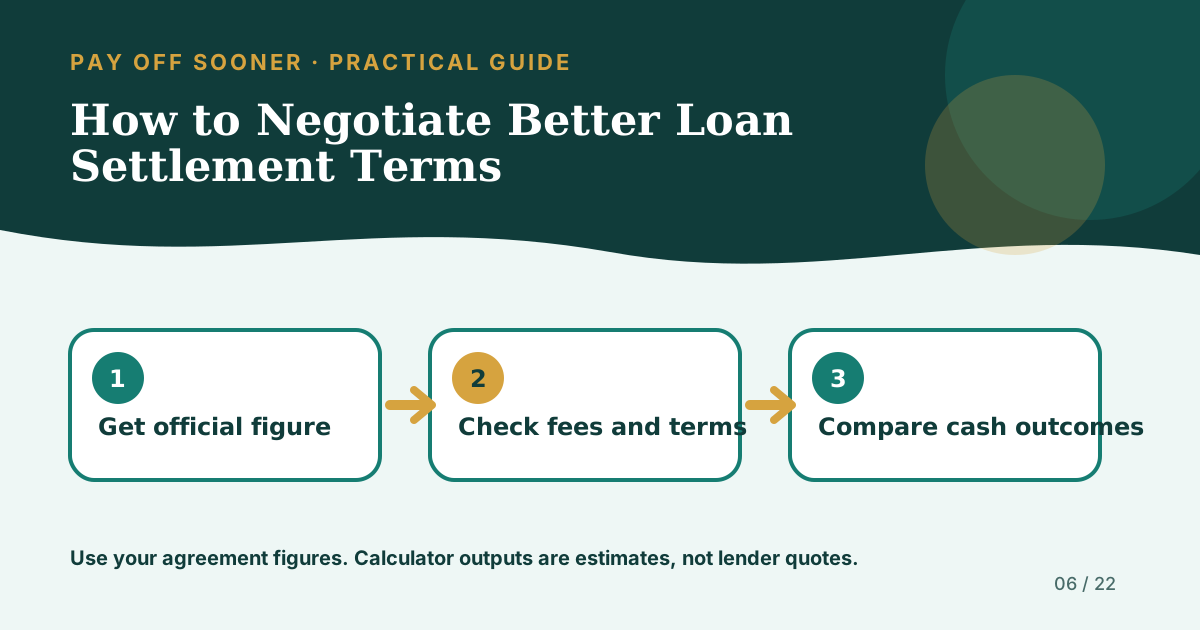
1. Request the quote through a traceable channel
Use online banking, a secure message, a letter or a recorded call reference where available. Ask for a full early-settlement quote, not merely the outstanding balance.
Lloyds Bank, for example, currently explains that customers need an early settlement quote and says its online quote is valid for 30 days. That is a provider example, not a universal validity period.
2. Record the exact expiry date
Do not assume the figure remains valid indefinitely. Interest, payment timing or the provider’s calculation can change it. If the quote will expire before funds arrive, request another one.
3. Compare cash amounts consistently
Multiply the normal payment by the number of payments remaining and add any unavoidable final fee. Compare that scheduled cash with the official quote. Call the result a cash difference, not confirmed cash saving, because the quote can contain adjustments and fees.
| Figure | Example | Where it comes from |
|---|---|---|
| Settlement quote | £6,190 | Lender’s dated quote |
| 24 remaining payments | 24 × £286 = £6,864 | Agreement or statement |
| Cash difference | £674 | £6,864 minus £6,190 |
4. Protect essential cash first
A positive cash difference does not make settlement automatically sensible. Check the amount left after preserving money for priority bills, known annual costs and emergencies. Replacing a low-rate loan with new card borrowing can undo the benefit.
5. Confirm how to pay and close the account
- Exact payee and payment reference
- Maximum transfer limits and whether more than one payment is accepted
- Whether the next direct debit will still be collected
- When the account will be marked closed or settled
- When written confirmation will be issued
6. Keep the evidence
Save the quote, payment confirmation and closure message. Check the next statement and, where important, the credit-reference files later for accurate reporting.
Use the comparison calculator
The Loan Settlement Calculator compares the quote with scheduled cash and shows the cash left after settlement. It deliberately does not claim to recreate the lender’s statutory calculation.
Prepare before contacting the lender
Have the agreement number, current monthly payment, next payment date and expected source of settlement funds ready. Decide whether you want a full settlement or only a partial overpayment. Those requests can be handled differently, and an app balance is not a substitute for either calculation.
Ask the lender to separate the components
Request the amount needed to settle in full, the valid-to date and any adjustment or fee included. Lloyds Bank currently states that its online quote is valid for 30 days and that an early settlement adjustment of up to 58 days’ interest may apply, with exceptions described on its page. That is a Lloyds example, not a universal rule. Your own agreement and lender quote control the result.
Check payment limits before the deadline
A quote can expire while a borrower is discovering that the bank’s daily transfer limit is lower than the settlement amount. Confirm whether payment must come from a nominated account, whether multiple transfers are allowed, whether a debit-card payment is available and what reference must be used. Leave enough working days to solve a limit problem without sending money to an unverified account.
Compare the quote without relabelling it
The scheduled cash remaining is the regular payment multiplied by the number of payments left, plus any unavoidable final amount. Subtracting the quote produces a cash difference. It does not necessarily reveal the exact interest rebate or every statutory component. The lender’s system performs that calculation.
| Check | Why it matters |
|---|---|
| Quote valid-to date | Using an expired figure can leave a balance outstanding |
| Next direct debit | It may still be collected or change the final amount |
| Payment reference | Incorrect allocation can delay closure |
| Closure confirmation | Proves the account was fully settled |
| Credit-file update | Allows an inaccurate status to be challenged later |
Do a cash-reserve check
Settlement can reduce total scheduled cash but still be the wrong immediate decision if it empties the emergency fund. Record the cash that remains after settlement and the essential costs due before the next reliable income. Do not assume a credit card can replace the reserve cheaply.
After payment
Save the transfer receipt and check the account after the lender’s stated processing period. Obtain written closure confirmation. If the account remains open or the balance is unexpected, raise the issue using the quote and payment evidence rather than relying on a phone recollection.
Partial overpayments require a different question
If the intention is to pay only part of the loan, ask how the lender will apply it. The provider may shorten the term, reduce future payments or recalculate the schedule under the agreement. A full-settlement quote does not answer that question, and a generic amortisation model cannot promise which treatment the provider will use.
Check for a processing gap
Ask how long the provider takes to allocate the payment and whether interest continues during that period. Do not send a second payment because the app has not updated unless the lender confirms the first one failed. Duplicate transfers can create a separate refund problem.
Escalate discrepancies with a complete evidence pack
If the account is not closed, send the quote, payment date, amount, reference and proof of receipt. State the outcome requested—allocation, correction, closure confirmation or refund. If the lender’s final response does not resolve the complaint, the response should explain any external complaint route and deadline that applies.
Settlement and future borrowing
Settling removes a monthly commitment but also uses cash. Someone preparing for a mortgage application should consider both affordability and deposit reserves, and may need regulated advice. Do not settle solely to create a particular credit-score movement.
A good settlement process answers three separate questions: is the quote correct for the date, is paying it affordable, and has the account been demonstrably closed?
A telephone checklist
Write down the adviser’s name or identifier, call date, quote amount, validity date, payment route and case reference. Read the figures back before ending the call. Ask for the quote through a secure message or document where possible, because a written record is easier to verify than handwritten notes alone.
If a third party is supplying the funds, confirm whether the lender accepts that payment and what anti-fraud or identification checks apply. Never change payment details solely because of an unsolicited email or call.
Confirm the quote covers the whole agreement
Ask whether the figure includes arrears, fees, payment protection refunds, linked accounts or any residual amount. If the loan was refinanced or varied, confirm the quote applies to the current agreement and not an older account reference.
Before sending funds, independently verify the payee and reference through the lender's official app, website or telephone number. Settlement payments are large enough to justify a second check. Record who confirmed the details and when, especially if the quote is close to expiry.
Worked example: request, verify, compare
A borrower has 24 payments of £286 remaining, so the scheduled cash remaining is £6,864. The lender supplies a full-settlement quote of £6,190 valid for 28 days. The meaningful comparison is £6,864 versus £6,190, followed by checks for fees, quote expiry and whether the account will be marked fully settled.
Sources and further checking
Sources were checked on 27 July 2026. Provider pages illustrate product-specific practice and should not be treated as universal rules.
How this guide was produced
Pay Off Sooner may use software and generative AI to organise research, test structure, identify repeated wording and support drafting. The page is not published solely because an automated system produced text. Conor Dwyer selects the topic, checks cited sources, reviews calculations and examples, removes unsupported claims and accepts responsibility for corrections. Read the full editorial and automation policy.