
A car-finance settlement figure is the provider's dated amount for closing the agreement early. It is not simply the balance displayed in an app, the sum of remaining monthly instalments, the vehicle's market value, or the voluntary-termination amount. The figure can only be understood properly when the agreement type, optional final payment, fees, arrears, quote expiry, and vehicle value are considered together.
This guide covers practical checks for regulated hire purchase, personal contract purchase, conditional sale, and simple loan-style car borrowing. Agreements differ, and the provider's written quote and contract remain authoritative. If payments are unaffordable, free debt advice can be more useful than trying to fund settlement through new borrowing.
Identify the agreement before comparing numbers
Look at the agreement heading and key financial information. A personal loan used to buy a car is normally separate from the vehicle: the borrower owns the car and repays the loan. Hire purchase and conditional sale usually link ownership to completion of the agreement. PCP usually includes regular instalments and an optional final payment if the customer wants to keep the vehicle.
Personal contract hire is leasing rather than purchase finance and uses different early-termination terms. Do not put a lease termination charge into a PCP settlement calculator and assume the result has the same meaning.
Ask for a written, dated settlement quote
Request the quote through the provider's official app, website, secure message, or confirmed telephone number. Record the agreement number, date requested, date produced, expiry date, payment instructions, and whether requesting the quote changes anything. A quote normally expires because interest and account activity continue.
Before paying, confirm the bank details and reference independently through an official channel. Car-finance settlement payments are large enough to justify a second check. Do not rely on payment details supplied only by an unsolicited email, message, or caller.
Understand what the quote may include
The provider calculates the settlement under the agreement and applicable rules. The quote may reflect outstanding capital, a rebate of future charges where applicable, interest up to a date, permitted early-repayment compensation, arrears, fees, and an optional final payment. The exact presentation varies.
Ask for an explanation where the figure cannot be reconciled with the agreement. The aim is not to reproduce the provider's formula from a generic website; it is to check that the quote refers to the correct agreement, has not expired, and includes the items you expect.
Compare settlement with scheduled cash remaining
Add the contractual instalments still due and any final payment that would be required to own the vehicle. Then compare that scheduled cash with the official settlement quote. This produces a cash difference, not a guaranteed saving. It does not account for the time value of money, future missed-payment fees, insurance, maintenance, or the return that cash could earn elsewhere.
For a PCP with 20 payments of £310 and a £9,500 optional final payment, scheduled cash to keep the car is £15,700. If the provider's settlement quote is £13,900, the simple cash difference is £1,800. That does not automatically mean settling is best. The customer still needs £13,900 now and must compare the vehicle's value, emergency savings, alternative transport, and any borrowing needed to fund the payment.
Compare the quote with the vehicle's realistic value
Obtain more than one current valuation and distinguish a private-sale estimate from a dealer or instant-buying offer. The amount achievable after inspection may be lower than an online estimate. Record mileage, service history, condition, damage, keys, and specification accurately.
If the settlement quote is £13,900 and a realistic sale offer is £14,500, there may be £600 of positive equity before selling costs. If the best realistic offer is £12,800, there is £1,100 of negative equity. A dealership may describe negative equity as “rolled into” another agreement, but it has not disappeared; it becomes part of the next transaction and can increase the amount financed.
| Figure | Example | What it tells you |
|---|---|---|
| Official settlement quote | £13,900 | Cash required by quote expiry |
| Scheduled payments plus final payment | £15,700 | Contractual cash remaining to keep car |
| Realistic vehicle offer | £14,500 | Likely cash from sale after settlement |
| Estimated equity | £600 | Offer minus settlement, before other costs |
Do not confuse settlement with voluntary termination
Voluntary termination is a statutory route that can apply to certain regulated HP and PCP agreements. It is different from paying a settlement figure. The agreement shows the total amount payable and the amount relevant to the termination right. On PCP, the optional final payment is part of the total amount payable, so the halfway point can be much later than half the monthly term.
Under voluntary termination the vehicle is returned. Under settlement the customer pays the amount needed to close the finance and then deals with ownership according to the agreement. Condition, arrears, and reasonable-care issues can matter. Get advice before choosing between these routes when the consequences are unclear.
Check whether the quote includes arrears or fees
If payments are overdue, ask whether the settlement quote includes them and whether any separate amount remains. Confirm the treatment of late fees, collection activity, payment holidays, or a temporary arrangement. A payment taken after the quote was produced may change the figure.
Do not cancel the direct debit simply because settlement is planned. Keep it active until the provider confirms the correct action. A returned contractual payment can create arrears if settlement is delayed or rejected.
Check the optional final payment carefully
For PCP, determine whether the optional final payment is included in the settlement quote and in the scheduled-cash comparison. A low monthly payment can make a PCP look inexpensive while a large final payment remains. The comparison should show the route being considered: keep the car, sell after settlement, return under contract terms, or use voluntary termination where applicable.
Consider the source of settlement money
Paying settlement from savings, a cheaper loan, a dealership refinance, or sale proceeds creates different risks. Replacing the agreement with new borrowing can reduce a monthly payment while extending the term or increasing total cost. A secured loan introduces much greater risk. Compare APR, fees, term, total amount payable, and the cash reserve left after the transaction.
If settlement would empty the emergency fund, model the cost of a realistic repair or income interruption afterwards. Saving £1,000 in scheduled cash is not helpful if the household then uses a 30% APR card for an emergency.
Worked example: settlement and negative equity
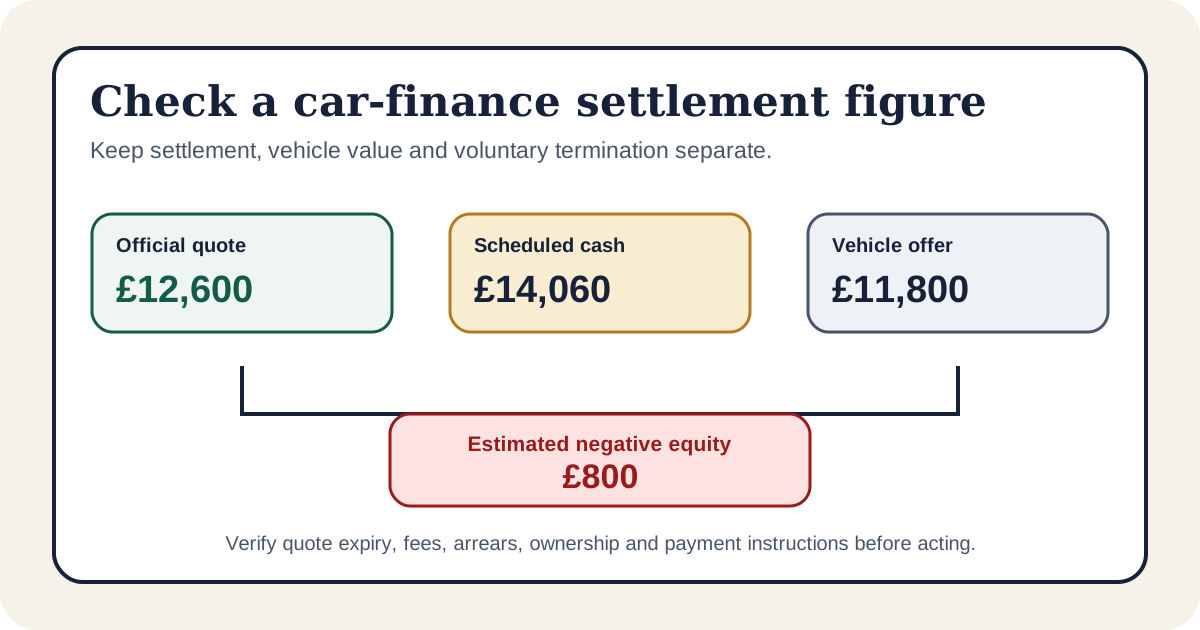
A customer has a PCP with 18 payments of £295 remaining and an optional final payment of £8,750. Scheduled cash to keep the vehicle is £14,060. The official settlement quote is £12,600 and expires in 12 days. The best realistic vehicle offer is £11,800.
The quote is £1,460 below the scheduled cash remaining, but the vehicle is worth about £800 less than the settlement. Selling immediately would require the customer to provide that £800 plus any transaction costs. The customer therefore compares continuing the agreement, funding the shortfall, and any contractual return or voluntary-termination rights. The £1,460 cash difference is not described as money “in the bank” because it requires a large immediate payment and does not remove the equity shortfall.
Settlement before selling the vehicle
With HP or PCP, the finance provider usually retains an interest in the vehicle until the agreement is settled. Do not advertise or sell the car as unencumbered without understanding the required process. A dealer or buying service may settle the finance directly and pay or collect the equity difference, but verify the figures and documents.
Check completion and ownership records
After payment, obtain written confirmation that the agreement is settled and no balance remains. Check whether the provider will update relevant finance markers and how long that may take. Keep the settlement quote, payment confirmation, closure letter, and any vehicle-sale invoice.
If a credit report later shows incorrect information, use the provider's complaint process and the credit-reference agency's dispute process. A settled agreement may remain on the credit file as historical information; settlement does not mean the record vanishes.
Questions to ask the provider
- What agreement type is this and who currently owns the vehicle?
- What date does the settlement quote expire?
- Does it include the optional final payment, arrears, and all fees?
- Will another direct debit be collected before settlement completes?
- How should the payment be referenced and verified?
- When will written closure confirmation be issued?
- What happens if a payment reaches you after the quote expires?
- Does requesting a quote affect the agreement?
- What voluntary-termination information appears in the contract?
When to seek help rather than refinance
If the settlement is being considered because payments are unaffordable, contact the provider early and use free debt advice. A new agreement with a lower monthly amount can hide a longer term, higher total cost, or additional negative equity. Explain the household budget and ask for all available support and consequences in writing.
Bottom line
Use an official, unexpired settlement quote and identify the agreement before comparing anything. Compare the quote with scheduled cash remaining, the vehicle's realistic value, the cash reserve left, and the cost of any replacement borrowing. Keep settlement, voluntary termination, contractual return, and vehicle sale as separate routes. The calculator can organise the figures, but the provider's documents and the agreement decide the legal and financial outcome.
Worked example: compare settlement, scheduled cash and vehicle value
A PCP customer has 18 payments of £295 plus an £8,750 optional final payment. The official settlement quote is £12,600 and the realistic vehicle offer is £11,800. The tool makes the £800 negative-equity position visible instead of presenting the lower settlement quote as an automatic saving.
Sources and further checking
Sources were checked on 27 July 2026. Provider pages illustrate product-specific practice and should not be treated as universal rules.
How this guide was produced
Pay Off Sooner may use software and generative AI to organise research, test structure, identify repeated wording and support drafting. The page is not published solely because an automated system produced text. Conor Dwyer selects the topic, checks cited sources, reviews calculations and examples, removes unsupported claims and accepts responsibility for corrections. Read the full editorial and automation policy.